
Over the past decades, population growth has become a challenge for agriculture as it aims to meet human food demands. Conversely, pests, pathogens, weeds, and adverse climate changes have reduced crop yields. To address this issue, new pesticides have been employed for plant protection, leading to an increase in global crop production. Herbicides not only control target weeds but also affect non-target organisms. Herbicides account for 50-60% of pesticide use, with paraquat (or methyl viologen; paraquat dichloride, 1,1'-dimethyl-4,4'-bipyridinium dichloride) and glyphosate (G, N-(phosphonomethyl)glycine) being among the most widely used non-selective herbicides.
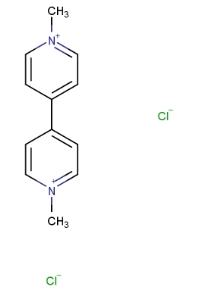
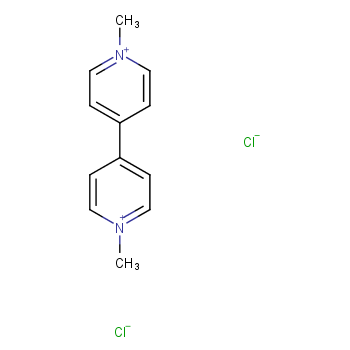
Paraquat dichloride is a colorless, hygroscopic crystal with a melting point of approximately 300°C (decomposition), a vapor pressure of <0.1 mPa, a density of 1.24-1.26 (20°C), and a solubility of 700 g/L (20°C). It is almost insoluble in most organic solvents, stable in neutral and acidic media, but rapidly hydrolyzes in alkaline media and decomposes under UV light.
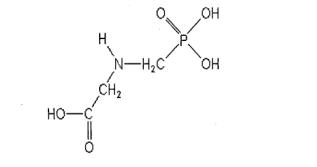
Glyphosate in its pure form is a white solid with a melting point of approximately 230°C (decomposition). It has a solubility of 1.2% in water (25°C) and is insoluble in common organic solvents. Its salts (e.g., isopropylamine salt) have higher solubility in water. Glyphosate is non-flammable, non-explosive, and relatively stable under normal storage conditions.
Paraquat dichloride is a fast-acting, contact herbicide that is effective against broadleaf weeds. It is rapidly absorbed by plant leaves and inhibits photosynthesis by accepting electrons from photosystem I (PSI). This prevents NADPH formation and generates reactive oxygen species. These reactive oxygen species cause the formation of superoxide anions, singlet oxygen, hydroxyl radicals, and peroxides, leading to damage to biological membranes. Paraquat dichloride loses its biological activity in soil and has minimal or no toxicity to roots and rhizomes. Additionally, it does not affect mature bark. Due to these properties, paraquat dichloride is used in orchards, plantation crops, conservation tillage systems, and other applications.
Glyphosate controls most annual and perennial weeds and is widely used in agriculture, forestry, and landscape management. It is used to remove unwanted vegetation in aquatic and urban ecosystems, such as roadsides, irrigation ditches, and recreational areas, and for woody weed control. Glyphosate also applies to glyphosate-resistant genetically modified crops for burn-down and post-emergence applications. It inhibits growth by causing chlorosis at new growth points and necrosis throughout the plant. Glyphosate inhibits the 5-enolpyruvylshikimate-3-phosphate (EPSP) synthase in the shikimic acid pathway, preventing the synthesis of essential aromatic amino acids like phenylalanine, tryptophan, and tyrosine.

Paraquat dichloride and glyphosate are both common herbicides, but their side effects and health risks differ. Paraquat dichloride poisoning can cause oral ulcers, thrombosis, cell and tissue death, lung cysts, lung damage, renal failure, liver failure, dehydration, hypotension, mineral imbalance, and Parkinson's disease. In contrast, glyphosate's side effects include chronic kidney disease due to liver and kidney damage, eye and skin irritation, increased salivation, burning sensations in the mouth and throat, vomiting, diarrhea, cancer, and DNA damage. These side effects highlight the importance of adhering to strict safety measures and legal regulations to minimize potential health hazards.
The comparison of paraquat dichloride and glyphosate concerning human health shows that paraquat is far more toxic than glyphosate. According to the Pesticide Action Network, the acute toxicity of paraquat is 28 times greater than that of glyphosate, leading to its ban in many countries and its restriction in some areas within the United States.
Exposure to high doses of paraquat poses threats to the kidneys, liver, heart, gastrointestinal tract, and other vital organs, with lung damage being the most severe and difficult to treat. Paraquat induces severe lung problems by generating free radicals that damage lung tissue. Symptoms after ingestion include burning sensations in the mouth, throat, chest, upper abdomen, nausea, vomiting, abdominal pain, and diarrhea. If patients survive, these gastrointestinal symptoms subside within 2–3 days, but oral ulcers, acute renal failure, and jaundice may appear later. Early or delayed respiratory distress or failure is a typical feature of the condition. Common symptoms affecting the central nervous system (CNS) and other systems include dizziness, headache, fever, myalgia, drowsiness, and coma. These cases have a high mortality rate due to inherent toxicity and lack of effective treatments. There are no widely accepted guidelines for treating such poisoning. Immediate treatment is essential to prevent systemic toxicity. For exposure to paraquat and glyphosate, using adsorbents (such as bleaching clay, bentonite, or activated carbon) for gastric lavage or whole bowel irrigation is recommended.
In contrast, glyphosate is relatively less toxic, but chemicals added to glyphosate formulations (such as surfactants) may cause neurological damage. The main component, aminomethylphosphonic acid, has neurotoxicity, and long-term exposure to high concentrations of glyphosate can increase toxicity risks. The mechanism of glyphosate-induced toxicity is complex. Common symptoms include gastrointestinal erosion in the mouth and throat, upper abdominal pain, and difficulty swallowing. In severe cases, there may be altered consciousness, arrhythmias, pulmonary edema, shock, renal failure requiring dialysis, hyperkalemia, and metabolic acidosis. The amount of ingested compound is reasonably related to its effects. There is no specific antidote for glyphosate poisoning; treatment is mainly supportive, or for patients admitted within one hour of ingestion, activated charcoal and gastric lavage may be considered.
Both paraquat and glyphosate are toxic when inhaled or ingested, but paraquat is significantly more toxic. The toxicity of paraquat is 28 times greater than that of glyphosate. When choosing between paraquat dichloride and glyphosate, strict adherence to legal regulations and safety requirements is necessary. Paraquat’s toxicity is significantly higher than glyphosate, leading to its ban in many countries and restriction in some areas. Although glyphosate has lower toxicity, its long-term use also poses health risks. Therefore, regardless of the herbicide chosen, it is essential to comply with legal requirements, ensure use in legally permitted areas, and take adequate safety measures. Ensuring legal and compliant use can effectively manage plant growth while maximizing user and environmental safety.
[1]https://www.epa.gov/ingredients-used-pesticide-products/paraquat-dichloride
[2]Zhou Dingjian. Effects of paraquat and glyphosate on soil microbial population and enzyme activity in purple soil[D]. Chongqing: Southwest University, 2010. DOI:10.7666/d.y1845955.
[3]https://en.wikipedia.org/wiki/Paraquat
[4]Tzvetkova P, Lyubenova M, Boteva S, et al. Effect of herbicides paraquat and glyphosate on the early development of two tested plants[C]//IOP Conference Series: Earth and Environmental Science. IOP Publishing, 2019, 221: 012137.
[5]Cherukuri H, Pramoda K, Rohini D, et al. Demographics, clinical characteristics and management of herbicide poisoning in tertiary care hospital[J]. Toxicology international, 2014, 21(2): 209.
[6]Martins-Gomes C, Silva T L, Andreani T, et al. Glyphosate vs. glyphosate-based herbicides' exposure: A review on their toxicity[J]. Journal of Xenobiotics, 2022, 12(1): 21-40.
[7]Dennis P G, Kukulies T, Forstner C, et al. The effects of glyphosate, glufosinate, paraquat and paraquat-diquat on soil microbial activity and bacterial, archaeal and nematode diversity[J]. Scientific reports, 2018, 8(1): 2119.
|
 |
 |


 6YRS
6YRS

