
Norethindrone is a progestin used in contraceptive pills, menopause hormone therapy, and the treatment of gynecological disorders. It is available under various brand names. The medication is offered in both low and high dose formulations and can be used alone or in combination with estrogen. Norethindrone can be administered orally or via injection (as norethindrone acetate). When used as a hormonal contraceptive, norethindrone is often combined with estrogen (such as ethinyl estradiol) to form a combined oral contraceptive pill; in pure progestin pills, norethindrone is used alone. Another medical use of norethindrone is to alleviate pain associated with endometriosis. The impact of contraceptives on acne may vary depending on the type of progestin used. Current research on the direct relationship between norethindrone and acne is insufficient. Some studies suggest that progestin-only drugs (such as norethindrone) may exacerbate acne in some individuals, while others may see improvement. This variance indicates that norethindrone's effects on acne can differ from person to person.
Norethindrone was discovered in 1951 and is one of the earliest developed progestins. It was first used alone for medical purposes in 1957 and was combined with estrogen for contraceptive use in 1963. It is sometimes referred to as a "first-generation" progestin. Along with desogestrel, it is one of the few progestins used in "mini-pills" for contraception. Norethindrone is widely sold globally and is available as a generic drug. In 2021, it was the 140th most prescribed drug in the United States, with over 4 million prescriptions. It is listed on the World Health Organization's list of essential medicines.
Norethindrone: The chemical name is 17α-ethynyl-17β-hydroxy-19-nor-4-androstene-3-one. The figure below shows the chemical structure of norethindrone:
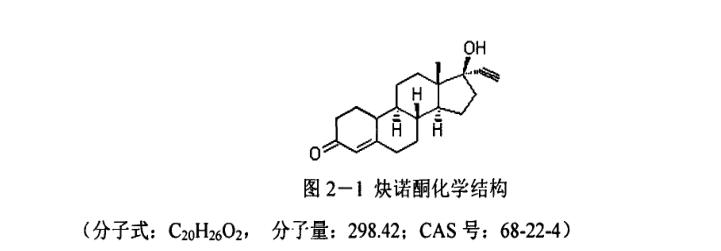
The chemical structure of norethindrone can be viewed in three ways: as a 19-norandrostan (with 17α-ethynyl as a substituent), as a 19-norprogesterone (with 17α-ethynyl as part of the core structure), or as an estrane (with no methyl group at position 19).
What is norethindrone used for? Norethindrone is primarily used for contraception and is a common component in oral contraceptive pills. Additionally, it can be used to treat functional uterine bleeding, female infertility, dysmenorrhea, amenorrhea, endometriosis, and endometrial hyperplasia.
Norethindrone has few side effects. Occasionally, allergic reactions may occur, causing significant irritation in women’s vulva or vagina, and even in men’s penis, such as localized itching and pain. Some patients may experience mild localized irritation and increased vaginal discharge.
The purpose of norethindrone use varies, and so do the methods of administration:
As a Short-Term Oral Contraceptive: This includes combined norethindrone tablets, films, or paper sheets, starting from the 5th day of the menstrual cycle, taking one tablet daily, preferably after dinner (or after breakfast for night shift workers), continuously for 22 days without interruption, and resuming after menstruation on the 5th day.
As an Emergency Contraceptive: Mainly emergency contraceptive pills, starting on the night of intercourse, taking one pill (5mg) each night. For intercourse within 10 days, take 10 pills; within two weeks, take 14 pills; for more than two weeks, switch to short-term oral contraceptives after 14 pills until the end of the emergency period.
Treating Functional Uterine Bleeding: Take one norethindrone tablet, film, or paper sheet (2.5mg) every 8 hours (every 3 hours in emergency cases, reducing to every 8 hours once bleeding decreases), then gradually reduce the dosage to a maintenance dose of one tablet daily for 20 days. Alternatively, after bleeding stops, add 0.05mg of estradiol or 1mg of ethinyl estradiol daily for 20 days.
Infertility: Take 2.5mg of norethindrone and 0.05mg of estradiol daily for 20 days, for a total of 3 cycles.
Dysmenorrhea and Endometriosis: Start from days 5 to 7 of the menstrual cycle, taking 2.5mg daily for 20 days.
Currently, available norethindrone formulations in China include:
(1) Oral contraceptive tablet No. 0: Each tablet contains 0.3 mg of norethindrone, 0.5 mg of megestrol acetate and 0.035 mg of estradiol.
(2) Oral contraceptive film No. 0: Each small square contains 0.3 mg of norethindrone, 0.5 mg of megestrol acetate and 0.035 mg of ethinyl estradiol.
(3) Compound norethindrone tablet (contraceptive tablet No. 1): Each tablet contains 0.6 mg of norethindrone and 0.035 mg of estradiol.
(4) Compound norethindrone film (oral contraceptive film No. 1): Each small square contains 0.6 mg of norethindrone and 0.035 mg of estradiol.
(5) Compound norethindrone paper (thin oral contraceptive tablet No. 1): Each small square contains 0.6 mg of norethindrone and 0.035 mg of ethinyl estradiol.
(6) Norethindrone visiting relatives' tablet (visiting relatives contraceptive pill): Each tablet (or pill) contains 3 mg and 5 mg of norethindrone. Oral administration.
(7) Norethindrone (Fukang) tablets: Each tablet contains 0.625 mg of norethindrone.
(8) Norethindrone (Fukang) film: Each tablet contains 0.625 mg of norethindrone.
(9) Norethindrone paper tablets (thin Fukang tablets): Each tablet contains 0.625 mg of norethindrone.
(10) Compound norgestrel tablets-330: Each tablet contains 0.3 mg of norethindrone, 0.3 mg of methylnorgestrel, and 0.03 mg of ethinyl estradiol.
(11) Norethindrone biphasic tablets (Ortho-Novum, 10/11): For the first 10 days, each tablet contains 0.5 mg of norethindrone and 0.035 mg of ethinyl estradiol. For the next 11 days, each tablet contains 1 mg and 0.035 mg of the corresponding drugs.
(12) Norethindrone triphasic tablets (Ortho-Novum, 7/7/7): Each tablet contains 0.5, 0.75, and 1 mg of norethindrone and 0.035 mg of ethinyl estradiol, respectively, every 7 days.
Norethindrone is a potent 19-nor-testosterone progestin, with five times the progestational activity of progesterone, and has mild androgenic and estrogenic activity. Norethindrone suppresses the secretion of hypothalamic luteinizing hormone-releasing hormone (LHRH) and acts on the anterior pituitary to decrease its sensitivity to LHRH, thereby blocking the release of gonadotropins. This suppression of ovulation is why norethindrone is often used in combination with ethinyl estradiol as a short-term oral contraceptive. If used after ovulation, norethindrone can convert the endometrium to the secretory phase under estrogenic influence and, at higher doses, affect the development and secretion of endometrial glands, thereby hindering implantation. When used alone at higher doses, norethindrone can thicken cervical mucus, prevent sperm penetration, and inhibit the growth of endometrial glands, thus effectively preventing implantation and serving as an emergency contraceptive.
Norethindrone, as a progestin medication, has various uses including contraception, menopause hormone therapy, and gynecological disease management. It can be used alone or combined with estrogen, with options available in both low and high-dose formulations based on specific needs. However, given the complexity of hormonal regulation involved, it is essential to understand the drug's indications and side effects before use. To ensure safety and efficacy, consult a doctor before starting norethindrone to receive professional medical advice tailored to individual conditions.
[1]Shi Cheng. Research on the synthesis process of norethindrone[D]. Zhejiang University, 2010.
[2]https://medlineplus.gov/druginfo/meds/a604034.html
[3]https://www.drugs.com/mtm/norethindrone.html
[4]https://en.wikipedia.org/wiki/Norethisterone
 |
 |
 |



 3YRS
3YRS


