
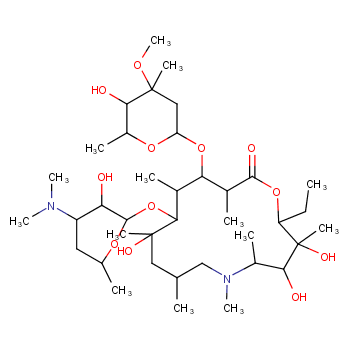
Azithromycin, with the chemical formula C38H72N2O12 and CAS number 83905-01-5, is a macrolide antibiotic widely used to treat various bacterial infections, including respiratory infections, skin conditions, and sexually transmitted diseases.
Penicillin, a group of β-lactam antibiotics originally obtained from Penicillium moulds, is effective against numerous bacterial infections, particularly those caused by streptococci and staphylococci. The most common forms of penicillin in clinical use are penicillin G (administered intramuscularly or intravenously) and penicillin V (oral administration).
Azithromycin and penicillin are both antibiotics used to treat bacterial infections, but they differ in their chemical structure, spectrum of activity, and uses. Azithromycin, a macrolide, is often used for treating respiratory and soft tissue infections, while penicillin is primarily used to treat bacterial infections like strep throat, pneumonia, and some skin infections.


Both azithromycin and penicillin are naturally occurring antibiotics, but azithromycin requires a more complex chemical synthesis and fermentation process compared to penicillin. While penicillin has been in use since the 1940s and remains essential in treating bacterial infections, azithromycin's synthesis process reflects its development to target a broader range of bacterial strains.
Both azithromycin and penicillin are crucial antibiotics in the medical field, each playing a vital role in treating bacterial infections. Their applications, however, are distinct, depending on the specific bacterial infection, patient characteristics, and the ever-growing concern of antibiotic resistance. Understanding these differences allows for more effective and targeted treatment plans for a variety of infections.

Azithromycin, a member of the macrolide class of antibiotics, is widely known for its versatility in treating a range of bacterial infections. It is commonly prescribed for respiratory tract infections such as pneumonia, bronchitis, and sinusitis. Its ability to penetrate tissues and maintain effective levels for extended periods makes it particularly suitable for chronic or persistent respiratory infections.
In addition to its efficacy against respiratory pathogens, azithromycin is frequently used to treat a variety of other infections, including skin infections like cellulitis, ear infections (otitis media), and certain sexually transmitted infections (STIs), such as chlamydia. The drug’s broad-spectrum antimicrobial properties allow it to target a diverse array of bacterial pathogens, including those resistant to other antibiotics, making it a go-to option in cases where resistance is a concern.
Azithromycin’s utility extends beyond bacterial infections; it is sometimes used as part of a combination therapy to treat Helicobacter pylori infections, a major cause of peptic ulcers. When paired with other drugs, azithromycin helps to eradicate this bacteria, thus aiding in the healing of ulcers. Additionally, azithromycin is often preferred in patients with penicillin allergies, as it provides an alternative for treating many of the same infections that penicillin targets. Its mild side-effect profile and broad indications make it an essential option in modern medicine.
Penicillin remains one of the most effective antibiotics for treating infections caused by streptococci, including strep throat, scarlet fever, and rheumatic fever. It is also used for treating bacterial pneumonia, meningitis, and syphilis. Penicillin's targeted action on bacterial cell walls makes it highly effective against gram-positive bacteria, such as Streptococcus and Staphylococcus.
However, the increasing incidence of antibiotic resistance has made penicillin less effective against certain strains of bacteria, especially in healthcare-associated infections. Despite this, penicillin remains a first-line treatment for many infections, particularly in patients who are not allergic to it.
The applications of azithromycin and penicillin are determined by the type of bacteria involved, the patient’s health status, and potential drug resistance. Azithromycin’s broad spectrum allows it to target a wide variety of pathogens, including those resistant to other antibiotics, making it ideal for infections that do not respond to first-line treatments. It is often prescribed when penicillin cannot be used, either due to an allergy or resistance concerns. Additionally, azithromycin’s ability to treat conditions beyond respiratory infections, such as STIs and Helicobacter pylori infections, adds to its versatility.
Penicillin, on the other hand, remains the gold standard for infections caused by specific organisms, particularly gram-positive bacteria such as Streptococcus and Staphylococcus. Its role in preventing complications like rheumatic fever and treating serious conditions like syphilis underscores its continued importance, even in the face of growing antibiotic resistance.
In summary, azithromycin is widely used for treating a variety of infections, including respiratory and sexually transmitted diseases, particularly in patients who cannot tolerate penicillin. Penicillin, on the other hand, is highly effective against infections caused by streptococci and is still the first-line treatment for many bacterial conditions. Both antibiotics are essential tools in the fight against bacterial infections, but their use must be carefully considered based on the type of infection and the patient’s medical history.
| Side Effect |
Azithromycin |
Penicillin |
|---|---|---|
| Digestive Issues | Possible, may cause nausea, diarrhea, or stomach discomfort | Rare, but may cause nausea or upset stomach |
| Allergic Reactions | Rare, could include rash, itching, or difficulty breathing | Common, especially in those with a penicillin allergy |
| Antibiotic Resistance | Possible, especially when overused | Risk of resistance with improper use or overuse |
When choosing between Azithromycin and Penicillin, it's essential to consider the type of bacterial infection you are dealing with, your personal medical history, and any sensitivities you may have. Azithromycin is a broad-spectrum antibiotic that is often preferred for respiratory infections, skin infections, and sexually transmitted diseases. It is typically well-tolerated and has a more convenient dosing schedule, often requiring just one dose per day for a short period. This makes it ideal for patients who need a quick, effective solution without a prolonged treatment course.
In contrast, Penicillin is a narrow-spectrum antibiotic that is particularly effective against Gram-positive bacteria, such as those that cause strep throat, syphilis, and some skin infections. While it has been a staple in the treatment of bacterial infections for many years, it may not be as effective against certain resistant strains of bacteria. Additionally, Penicillin may cause allergic reactions in some individuals, which can range from mild rashes to severe anaphylaxis. For patients with a known Penicillin allergy, alternative antibiotics like Azithromycin are often used.
Ultimately, the best choice depends on the type of infection, your specific medical needs, and your tolerance to each medication. Azithromycin is often preferred for its broad-spectrum activity and ease of use, especially for respiratory and sexually transmitted infections. However, for conditions caused by bacteria susceptible to Penicillin, such as certain types of strep throat or syphilis, Penicillin remains an effective and time-tested option.
* If you're unsure about which antibiotic is right for you, it is crucial to consult with your healthcare provider. They have the expertise to evaluate your specific health condition and take into account any underlying factors that may influence the choice of treatment. By considering potential risks of side effects or allergies, they can help ensure that the prescribed antibiotic is both effective and safe for your needs.
If you're looking to purchase these compounds, Guidechem is your go-to platform for sourcing high-quality raw materials and reliable suppliers. With our extensive global network, we connect you to a wide range of azithromycin suppliers, ensuring you find the right products to meet your specific research or production requirements. Whether you're in pharmaceuticals, food additives, or other industries, Guidechem simplifies the sourcing process, offering verified supplier information, competitive pricing, and seamless communication.
[1]Antibiotic Therapy: Principles and Practice by J. M. Taylor.
[2]Pharmacology of Antibiotics by L. R. Moore.
[3]Macrolide Antibiotics: Mode of Action and Clinical Applications in Journal of Clinical Medicine.
[4]The History of Penicillin: From Discovery to Resistance in Microbial Resistance.
[5]https://en.wikipedia.org/wiki/Azithromycin
[6]https://en.wikipedia.org/wiki/Penicillin
|
 |
 |


 2YRS
2YRS

