
Clindamycin, with the chemical formula C18H33ClN2O5S and CAS number 18323-44-9, is a lincosamide antibiotic used to treat a variety of serious bacterial infections, such as strep throat and skin infections. It is available as both a capsule and liquid, with a typical dosage of 3 or 4 times per day, depending on age and infection. Clindamycin can also be administered as an injection in a healthcare setting. Side effects include stomach upset, itching, and rash.
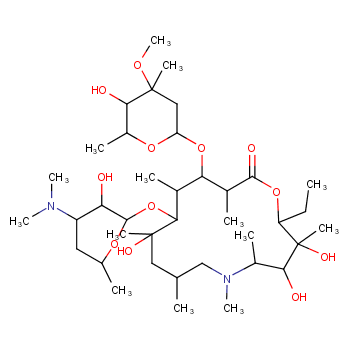
Azithromycin, with the chemical formula C38H72N2O12 and CAS number 83905-01-5, is a macrolide antibiotic commonly used to treat infections such as strep throat, sinus infections, and pneumonia in both children and adults. Azithromycin is typically taken once daily for a period of 3 to 5 days, depending on the infection type. It is also available in a pre-packaged form known as Z-Pak for convenience. Common side effects include diarrhea, stomach pain, and nausea.
Clindamycin and Azithromycin are both highly effective antibiotics used to treat a range of bacterial infections, but their chemical composition and mechanism of action differ significantly. Clindamycin belongs to the lincosamide class, while Azithromycin is a macrolide, which impacts their spectrum of activity, side effects, and dosing schedules.


Both clindamycin and azithromycin are created by modifying naturally occurring antibiotics. However, their synthesis methods differ because clindamycin is derived from lincomycin, a lincosamide, while azithromycin is a semisynthetic derivative of the macrolide antibiotic erythromycin. The differences in their synthesis reflect the distinct classes of antibiotics they belong to.
Both Clindamycin and Azithromycin are widely used to treat bacterial infections, yet each antibiotic offers unique benefits depending on the specific infection and the individual needs of the patient. These medications serve different roles in combating bacteria and have distinct advantages that make them valuable tools in modern medicine.

Clindamycin is a potent antibiotic, especially effective against serious bacterial infections, including strep throat, skin infections, and certain types of pneumonia. One of its major benefits is its usefulness in treating infections in individuals with a penicillin allergy, as it does not cross-react with penicillin. This makes it an ideal alternative for those who cannot tolerate penicillin-based drugs. Additionally, Clindamycin is often employed as part of combination therapy for treating more severe and life-threatening infections, such as sepsis and intra-abdominal infections, where multiple types of bacteria may be present.
An important advantage of Clindamycin is its effectiveness against anaerobic bacteria—those that thrive in environments without oxygen. Anaerobic infections are commonly found in abscesses, certain periodontal (gum) infections, and deep tissue infections where oxygen is limited. Due to its ability to target these bacteria, Clindamycin becomes a valuable choice for treating infections that other antibiotics might not be effective against. Its diverse administration options, including oral capsules, liquid formulations, and injectables, provide flexibility in treatment, allowing healthcare providers to tailor therapy to the severity of the infection and the patient's needs.
Azithromycin, on the other hand, is renowned for its broad spectrum of activity, particularly in the treatment of respiratory infections. It is widely prescribed for conditions such as pneumonia, bronchitis, sinusitis, and certain types of ear infections. The advantage of Azithromycin lies in its user-friendly dosing regimen—patients can take it once daily for a short duration, typically 3-5 days, making it more convenient than antibiotics that require multiple doses throughout the day. This ease of use enhances patient compliance, especially in individuals who may have difficulty adhering to a strict medication schedule.
Beyond respiratory infections, Azithromycin also plays a role in treating sexually transmitted infections (STIs) like chlamydia and gonorrhea, as well as some skin infections caused by bacteria. Its effectiveness against a wide range of pathogens, including bacteria that are resistant to other antibiotics, gives Azithromycin an edge in treating infections that may not respond to first-line treatments. The Z-Pak formulation of Azithromycin is particularly popular due to its simplified administration, contributing to its widespread use in clinical practice.
Another important feature of Azithromycin is its extended half-life, which allows it to remain active in the body for longer periods. This is beneficial for patients who may not be able to complete a full course of antibiotics or those who require a medication that remains effective over several days. Azithromycin's broad reach in combating bacterial infections, coupled with its easy dosing schedule, makes it a preferred choice for healthcare providers when treating a variety of infections.
In conclusion, while both clindamycin and azithromycin are effective antibiotics, they are used for different types of bacterial infections. Clindamycin is ideal for serious infections, especially in patients with penicillin allergies, while azithromycin is the preferred choice for treating respiratory and other common bacterial infections. Choosing the right antibiotic depends on the specific infection and patient factors.
| Side Effect |
Clindamycin |
Azithromycin |
|---|---|---|
| Digestive Issues | Risk of causing a type of infectious diarrhea | Can cause diarrhea, stomach pain, or nausea |
| Low Blood Pressure | Possible, may cause dizziness or lightheadedness | Possible, may cause dizziness or lightheadedness |
| Dehydration | Rare, may cause mild dehydration | Can cause dehydration due to its laxative effect |
| Kidney Strain | Should be used cautiously in individuals with kidney conditions | Risk of kidney strain, especially with prolonged use |
| Allergic Reactions | Rare, could include rash, itching, or swelling | Rare, could include rash, itching, or difficulty breathing |
When deciding between clindamycin and azithromycin for your health, it’s important to consider the nature of your infection, any underlying health conditions, and potential side effects. Clindamycin is highly effective against anaerobic bacteria and is typically used for more serious infections, including skin and bone infections. It is especially useful for individuals who may have an allergy to penicillin. However, clindamycin is known for causing gastrointestinal disturbances, including the risk of Clostridium difficile infections, which requires close monitoring. If you have a history of gastrointestinal issues, this could be a concern.
Azithromycin, on the other hand, is a broad-spectrum antibiotic commonly used for respiratory infections and sexually transmitted diseases. It is favored for its once-daily dosing and relatively lower risk of severe side effects compared to other antibiotics. However, azithromycin can affect heart rhythm, particularly in individuals with preexisting heart conditions. If cardiovascular issues are a concern, this may make azithromycin less suitable. Additionally, azithromycin tends to be more convenient for patients due to its shorter course of treatment, which may be more appropriate for outpatient care.
Ultimately, the choice between clindamycin and azithromycin depends on the specific type of infection, the patient’s medical history, and the risk of potential side effects. For individuals with gastrointestinal sensitivities or those who require treatment for anaerobic infections, clindamycin may be the preferred option. However, for less severe infections and those requiring a more convenient treatment regimen, azithromycin is often the better choice, especially when cardiovascular health is not a concern.
*It is essential to consult with your healthcare provider to determine the best antibiotic for your health needs. They can assess your individual situation and guide you towards the most appropriate choice for your specific condition and medical history.
If you're looking to purchase these compounds, Guidechem is your go-to platform for sourcing high-quality raw materials and reliable suppliers. With our extensive global network, we connect you to a wide range of clindamycin suppliers and azithromycin suppliers, ensuring you find the right products to meet your specific research or production requirements. Whether you're in pharmaceuticals, healthcare, or other industries, Guidechem simplifies the sourcing process, offering verified supplier information, competitive pricing, and seamless communication.
[1]Clindamycin: Mechanism of Action and Pharmacology by J. R. Thomas.
[2]Azithromycin: The Macrolide Antibiotic by S. K. Williams.
[3]Comparative Study on Antibiotic Resistance of Clindamycin and Azithromycin in Journal of Medical Microbiology.
[4]Side Effects and Risk Factors of Clindamycin in Clinical Use in Pharmaceutical Research.
[5]Azithromycin in Cardiovascular Disease: Risk Assessment and Management in Journal of Cardiovascular Pharmacology.
[6]https://en.wikipedia.org/wiki/Azithromycin
 |
|
 |


 2YRS
2YRS

