
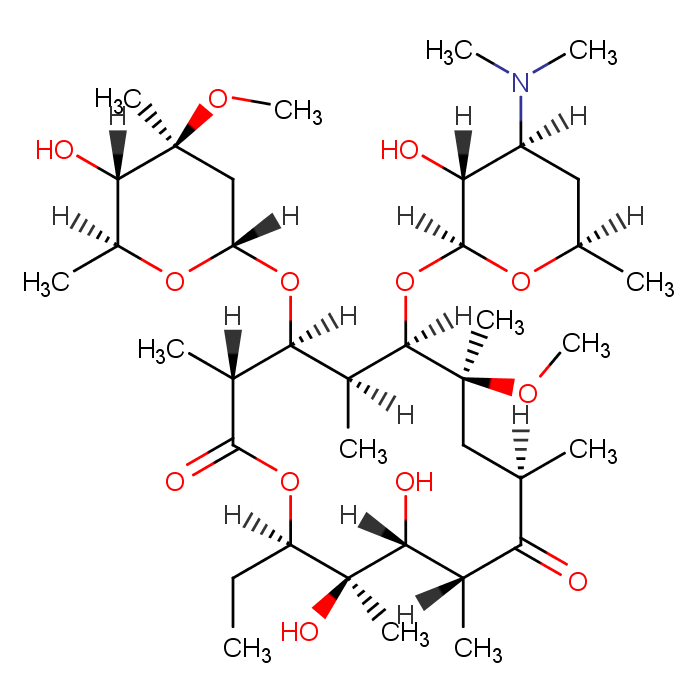
Clarithromycin, with the chemical formula C38H69NO13 and CAS number 81103-11-9, is a macrolide antibiotic widely used in the treatment of various bacterial infections, including respiratory tract infections, skin infections, and as part of a regimen for Helicobacter pylori eradication.
Amoxicillin, with the chemical formula C16H19N3O5S and CAS number 26787-78-0, is a penicillin-class antibiotic used to treat bacterial infections such as ear infections, urinary tract infections, and pneumonia. It is known for its broad-spectrum effectiveness against gram-positive and some gram-negative bacteria.
Clarithromycin and Amoxicillin are both antibiotics used to treat various bacterial infections, but they belong to different classes of drugs with distinct mechanisms of action. Clarithromycin, a macrolide antibiotic, works by inhibiting bacterial protein synthesis, while Amoxicillin, a penicillin-class antibiotic, inhibits the synthesis of bacterial cell walls. Both drugs are effective in treating a variety of infections, but they may be prescribed based on the specific bacteria involved and the patient's medical history.


Both drugs are synthesized from naturally occurring antibiotics, with significant modifications to improve their effectiveness. Clarithromycin’s synthesis begins with erythromycin, while Amoxicillin starts with ampicillin, and both processes result in compounds with enhanced activity against a variety of bacteria.
Both clarithromycin and amoxicillin are highly effective antibiotics widely used to treat bacterial infections. However, their applications vary depending on the type of infection, the bacterial strain involved, and patient-specific considerations. Below is an in-depth look at how each antibiotic is utilized in treating different bacterial infections.

Clarithromycin is particularly valued in the treatment of respiratory infections, such as bronchitis, pneumonia, and sinusitis, as well as skin infections like cellulitis and impetigo. It is known for its effectiveness against a broad spectrum of bacteria, including many that are resistant to other common antibiotics. This broad activity makes clarithromycin a powerful tool in the management of infections caused by both typical and atypical pathogens, such as those responsible for peptic ulcers due to Helicobacter pylori infection.
One of the key mechanisms by which clarithromycin exerts its antibacterial effects is by binding to the 50S subunit of bacterial ribosomes, thereby preventing protein synthesis. This disrupts bacterial growth and reproduction, making it effective against a wide range of pathogens. Its ability to target both aerobic and anaerobic bacteria enhances its utility in diverse clinical settings. For example, it has been shown to effectively treat Mycoplasma pneumoniae and Legionella pneumophila, organisms that are typically difficult to treat with other antibiotics.
Clarithromycin is also frequently used in combination therapies, particularly for the treatment of H. pylori infections. In these cases, it is often prescribed alongside proton pump inhibitors and other antibiotics to eradicate the bacterium. This combination approach not only enhances efficacy but also helps to minimize the risk of developing antibiotic resistance. Additionally, the ability of clarithromycin to penetrate various tissues, including lung and skin tissues, allows it to be effective in treating infections that may be harder to reach by other antibiotics, further expanding its clinical applications.
Amoxicillin is one of the most commonly prescribed antibiotics, primarily due to its effectiveness against a wide range of bacterial infections. It is particularly useful for treating ear infections, urinary tract infections (UTIs), and respiratory infections like pneumonia and bronchitis. Amoxicillin is known for its action against gram-positive bacteria, such as Streptococcus pneumoniae, Staphylococcus aureus, and Enterococcus species. It works by inhibiting bacterial cell wall synthesis, causing the bacteria to rupture and die.
In addition to being a frontline treatment for many upper respiratory infections, amoxicillin is particularly effective in the treatment of otitis media (middle ear infections), which are common in both children and adults. It also plays a crucial role in the management of urinary tract infections, where it targets pathogens like Escherichia coli and Proteus mirabilis. Amoxicillin’s ability to treat these infections efficiently and with a relatively low risk of side effects makes it a staple in primary care settings.
Amoxicillin is also widely used for community-acquired pneumonia, where it helps eradicate common bacterial pathogens that cause the condition. For cases of uncomplicated bronchitis, amoxicillin is often the first-line choice due to its ability to target common bacterial causes such as Streptococcus pneumoniae and Haemophilus influenzae. However, amoxicillin’s effectiveness may be limited in the case of more resistant bacterial strains, particularly those that produce beta-lactamase, an enzyme that can deactivate the antibiotic. In these situations, amoxicillin may be used in combination with clavulanate, a beta-lactamase inhibitor, to extend its spectrum of activity.
In conclusion, Clarithromycin is most effective for respiratory and soft tissue infections, especially when atypical bacteria are involved. Its broad-spectrum activity and ability to penetrate tissues make it invaluable in the treatment of infections like pneumonia and H. pylori. On the other hand, Amoxicillin is a go-to option for ear, respiratory, and urinary tract infections, particularly against gram-positive bacteria. The choice between these two antibiotics should depend on the type of infection and patient-specific factors.
| Side Effect |
Clarithromycin |
Amoxicillin |
|---|---|---|
| Digestive Issues | Common, may cause nausea, diarrhea, or abdominal pain | Rare, may cause mild gastrointestinal upset |
| Allergic Reactions | Possible, may cause rash or difficulty breathing | Possible, can cause rash or anaphylaxis in rare cases |
| Liver Strain | Possible, especially with prolonged use | Unlikely, but should be used with caution in patients with liver conditions |
| Drug Interactions | Common, can interact with many medications | Less common, but can interact with other antibiotics and anticoagulants |
When choosing the right antibiotic for your health, it's important to consider the nature of your infection, any underlying medical conditions, and your body's response to different treatments. Clarithromycin is a macrolide antibiotic that works by inhibiting bacterial protein synthesis, which makes it effective for treating a variety of bacterial infections, especially respiratory and skin infections. Its broad-spectrum activity makes it a suitable option for infections caused by both Gram-positive and Gram-negative bacteria. Moreover, it is often used for individuals with penicillin allergies, as it offers an alternative to beta-lactam antibiotics.
In contrast, Amoxicillin is a penicillin-type antibiotic that also targets bacterial cell wall synthesis, making it effective for treating infections such as ear infections, urinary tract infections, and pneumonia. Amoxicillin is generally considered to have a more favorable side effect profile, with fewer reports of gastrointestinal discomfort compared to Clarithromycin. It is widely used due to its effectiveness, safety, and low cost. However, individuals with penicillin allergies should avoid this option, and some bacteria may have developed resistance to Amoxicillin over time.
Ultimately, the choice between Clarithromycin and Amoxicillin depends on the infection being treated and the individual’s medical history. If you're dealing with a broad range of bacterial infections or have a penicillin allergy, Clarithromycin is a great choice. On the other hand, if you're seeking a more affordable, effective treatment for common infections with fewer side effects, Amoxicillin is likely the better option.
*For optimal results and to ensure that you are taking the appropriate antibiotic based on your specific health requirements, it is highly recommended to follow the guidance of your healthcare provider. They can help you determine the most suitable treatment based on your infection and medical history.
If you're looking to purchase these compounds, Guidechem is your go-to platform for sourcing high-quality raw materials and reliable compound suppliers. With our extensive global network, we connect you to a wide range of Clarithromycin suppliers and Amoxicillin suppliers, ensuring you find the right products to meet your specific research or production requirements. Whether you're in pharmaceuticals, healthcare, or other industries, Guidechem simplifies the sourcing process, offering verified supplier information, competitive pricing, and seamless communication.
[1]Antibiotics: Mechanisms of Action and Resistance by J. H. Brown.
[2]Clinical Uses of Macrolides and Penicillins by S. R. Johnson.
[3]Review of Antibiotic Resistance and Its Implications in Journal of Clinical Medicine.
[4]Antibiotic Therapy in the Treatment of Respiratory Infections in Infectious Disease Clinics.
|
 |


 15YRS
15YRS

