
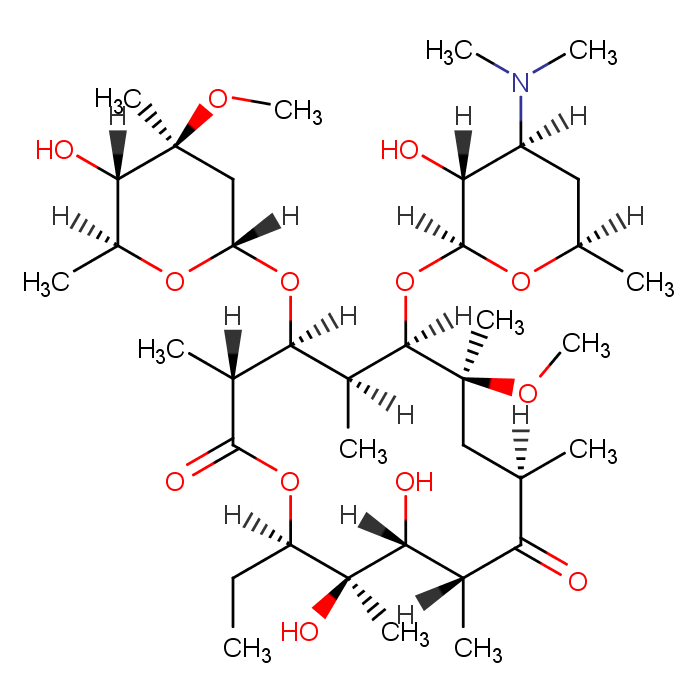
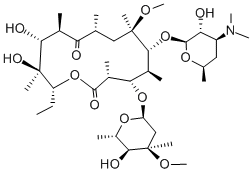
Clarithromycin, with the chemical formula C38H69NO13 and CAS number 81103-11-9, is a macrolide antibiotic used to treat a variety of bacterial infections. It is known for its broad-spectrum activity against both gram-positive and gram-negative bacteria and is often prescribed for conditions like dental abscesses, bronchitis, Helicobacter pylori infections, and more.
Clindamycin, with the chemical formula C18H33ClN2O5S and CAS number 18323-44-9, is a lincosamide antibiotic primarily used to treat anaerobic infections and serious gram-positive bacterial infections, particularly in individuals with penicillin allergies. While effective for a range of conditions, it carries a higher risk of causing Clostridium difficile-associated diarrhea compared to other antibiotics.
Clarithromycin and Clindamycin are both powerful antibiotics used to combat bacterial infections, but they differ in their spectrum of action, side effects, and specific uses. Clarithromycin is often preferred for respiratory and skin infections, while Clindamycin is more frequently used in cases of anaerobic infections or for people with penicillin allergies.


Both antibiotics are derived from natural sources, with clarithromycin being a modification of erythromycin and clindamycin being a derivative of lincomycin. Their synthesis processes differ in the specific microbial sources involved, as well as the types of chemical alterations made to optimize their antibacterial properties. Despite these differences, both are highly effective antibiotics used in the treatment of various infections.
Clarithromycin and Clindamycin are both critical in treating bacterial infections, but they are used for different types of conditions based on their spectrum of activity and effectiveness. Clarithromycin, a macrolide antibiotic, is commonly prescribed for respiratory and skin infections, as it targets a broad range of bacteria, including those causing pneumonia and sinusitis. In contrast, clindamycin, a lincosamide antibiotic, is particularly effective against anaerobic bacteria and is often used for treating infections in soft tissues, dental procedures, and certain intra-abdominal infections.

Clarithromycin is a broad-spectrum antibiotic widely utilized in the treatment of various bacterial infections, particularly those affecting the respiratory system. It is highly effective in combating respiratory tract infections such as bronchitis, pneumonia, and sinusitis. These conditions, which are often caused by common pathogens like Streptococcus pneumoniae and Haemophilus influenzae, can be treated effectively with clarithromycin due to its ability to target both gram-positive and some gram-negative bacteria. Its therapeutic applications extend beyond the respiratory system to include skin and soft tissue infections, where it can combat pathogens like Staphylococcus aureus and Streptococcus pyogenes.
Clarithromycin is also commonly used in the treatment of Helicobacter pylori infections, which are responsible for gastric ulcers, and it is often prescribed in combination with other drugs for a more comprehensive approach to eradicating the bacteria. Furthermore, clarithromycin is crucial for the prevention and treatment of Mycobacterium avium complex (MAC) infections in immunocompromised individuals, such as those living with HIV/AIDS. This makes it an indispensable part of the antibiotic arsenal for both common and complex bacterial infections. Its ability to cover a wide range of pathogens, including atypical bacteria, positions clarithromycin as a versatile and reliable option for addressing systemic and localized infections alike.
Clindamycin, another important antibiotic, is primarily employed in treating anaerobic infections, which are infections caused by bacteria that thrive in environments with little to no oxygen. Anaerobic bacteria are often responsible for severe and deep infections in tissues where oxygen is limited, such as in the abdomen, pelvis, and bones. As a result, clindamycin is highly effective in treating conditions like pelvic inflammatory disease, intra-abdominal infections, and bone infections, including osteomyelitis. Additionally, clindamycin plays a significant role in treating skin and soft tissue infections, particularly in patients who are allergic to penicillin. Since clindamycin is a lincosamide antibiotic, it works by inhibiting bacterial protein synthesis, making it effective against various gram-positive cocci and some anaerobic bacteria.
Beyond anaerobic and penicillin-allergic infections, clindamycin is also employed in the treatment of infections caused by Streptococcus pyogenes and Staphylococcus aureus, including both methicillin-resistant (MRSA) and methicillin-sensitive strains. It is also used in the management of toxic shock syndrome, a life-threatening condition caused by Streptococcus pyogenes, known for producing toxins that can lead to organ failure. Given its broad antimicrobial activity, clindamycin is often considered a critical therapeutic option for severe infections where other antibiotics may not be as effective or appropriate. Furthermore, due to its ability to target anaerobic bacteria, clindamycin is frequently used in dental and oral surgery infections, further expanding its range of clinical applications.
In conclusion, while both Clarithromycin and Clindamycin are effective antibiotics, they are used for different types of bacterial infections. Clarithromycin is better suited for treating respiratory and systemic infections, while Clindamycin is preferred for anaerobic infections and for patients with penicillin allergies. The choice between these antibiotics depends largely on the type of infection and the patient's medical history.
| Side Effect |
Clarithromycin |
Clindamycin |
|---|---|---|
| Digestive Issues | Rare, may cause mild nausea or abdominal discomfort | Common, can cause nausea, diarrhea, and abdominal pain |
| Risk of Superinfection | Possible, especially with prolonged use | Common, higher risk of Clostridium difficile infection |
| Liver Issues | Possible, can cause liver enzyme elevations | Rare, may cause liver damage with prolonged use |
| Allergic Reactions | Rare, rash or swelling may occur | Rare, can cause rash or severe allergic reactions |
When choosing between Clarithromycin and Clindamycin for your health, it's important to consider the type of infection you're dealing with and your specific medical needs. Clarithromycin is a macrolide antibiotic, known for its broad-spectrum efficacy, especially against Gram-positive bacteria and some Gram-negative bacteria. It's commonly prescribed for respiratory infections, skin infections, and for Helicobacter pylori eradication. Its gentle nature on the stomach makes it a favorable option for those who may have digestive sensitivities to other antibiotics.
In contrast, Clindamycin is a lincosamide antibiotic that excels at treating anaerobic infections and certain Gram-positive bacteria. It is often the go-to antibiotic for severe infections like abscesses and soft tissue infections, and is particularly useful for patients with penicillin allergies. However, Clindamycin has a higher potential for causing serious gastrointestinal issues, such as Clostridium difficile-associated diarrhea (CDAD), and should be used with caution in individuals with digestive sensitivities.
Ultimately, if you're looking for a more versatile antibiotic with a broader spectrum and fewer gastrointestinal side effects, Clarithromycin is a strong choice. However, if your infection involves anaerobic bacteria or you have a penicillin allergy, Clindamycin would be the superior option. Both antibiotics are effective, but their application should be tailored to the specific infection and individual health considerations.
*For optimal results and to ensure that you are taking the appropriate form and dosage, it is highly recommended to follow the guidance of your healthcare provider. They can help you determine the most suitable antibiotic based on your specific health requirements and any underlying medical conditions.
If you're looking to purchase these compounds, Guidechem is your go-to platform for sourcing high-quality raw materials and reliable suppliers of compounds. With our extensive global network, we connect you to a wide range of Clarithromycin suppliers and Clindamycin suppliers, ensuring you find the right products to meet your specific research or production requirements. Whether you're in pharmaceuticals, food additives, or other industries, Guidechem simplifies the sourcing process, offering verified supplier information, competitive pricing, and seamless communication.
[1]Antimicrobial Agents and Chemotherapy by F. M. Peterson.
[2]Clinical Pharmacology of Clarithromycin by R. A. Harper.
[4]The Role of Clindamycin in Treating Anaerobic Infections in Infectious Disease Reports.
 |
|


 15YRS
15YRS


